
January 17, 2026
We love traveling by train in Italy. It’s one of the easiest, fastest, and most enjoyable ways to explore the country.
For practicality, train travel works best when visiting major cities on a city tour. If we are heading to Umbria, Tuscany, or southern regions like Puglia, we usually prefer a car for flexibility.
Italy’s extensive rail network connects Rome, Florence, Milan, Venice, Naples, and many smaller towns that are difficult to reach by car. Understanding how Italy’s trains work can save time, money, and stress for any traveler planning an Italian vacation.stress.
How Italy’s Train System Works
Italy has one of Europe’s most efficient rail systems, making trains a popular alternative to driving. Most travelers use trains to move between cities and regions, while local transit (metro, buses, taxis) handles short distances.
The national rail operator is Trenitalia, and the main private competitor is Italo Treno. Both offer modern, comfortable trains with assigned seating on long-distance routes.
Types of Trains in Italy
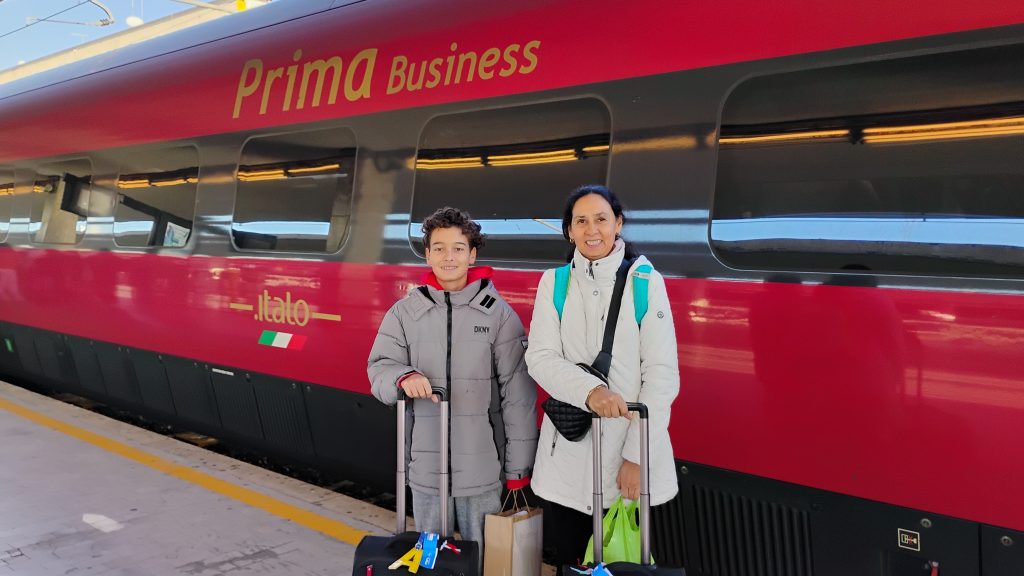
Understanding train types will help you choose the best option for your itinerary.
High-Speed Trains (Frecciarossa, Frecciargento, Italo)
Italy’s high-speed network is served by two operators and three main brands.
- Frecciarossa and Frecciargento are operated by Trenitalia (government-run).
- Italo is a private competitor.
All three are high-speed trains with top speeds around 180 MPH.
- Frecciarossa and Italo connect major cities: Rome, Florence, Venice, Milan, and Naples.
- Frecciargento combines high-speed and regional lines for routes like Rome → Bari, Rome → Reggio Calabria, and Venice → Trieste.
Key Features of High-Speed Trains:
- Fastest option for long distances
- Connect major cities like Rome, Florence, Milan, Venice, and Naples
- Seat reservations are required
- Tickets are cheaper when booked in advance
- Luggage is included (no weight limits, but space is limited)
These trains are ideal for travelers visiting multiple cities in a short time.
Intercity Trains
- Slower than high‑speed trains
- Fewer amenities but more affordable
- Seat reservations are required
- Useful for routes not served by high‑speed lines
Regional Trains (Regionale)
- Short distances and frequent stops
- Cheapest option
- No assigned seating
- Tickets must be validated before boarding unless purchased digitally
Regional trains are commonly used for day trips and travel between smaller towns.
Airport Trains
- Direct airport‑to‑city connections, such as the Leonardo Express from Rome Fiumicino to Roma Termini
- Fixed pricing and frequent departures
How to Buy Train Tickets in Italy
You can purchase train tickets in several ways:
- Online via Trenitalia or Italo websites
- Mobile apps (recommended for updates and changes)
- Ticket machines at stations
- Ticket counters (limited hours at smaller stations)
Booking Tips
- Book high‑speed trains early for the best prices
- Regional train prices are fixed and can be purchased on the day of travel
- Always double‑check departure stations and times
Ticket Validation: What Travelers Need to Know
Ticket validation is one of the most common sources of confusion for visitors.
- Validation is required only for paper tickets on regional trains
- Validate tickets at the small green or yellow machines before boarding
- Digital and mobile tickets do not require validation
- High‑speed and intercity tickets with assigned seats do not require validation
Failure to validate a required ticket may result in fines.
What to Expect at Italian Train Stations
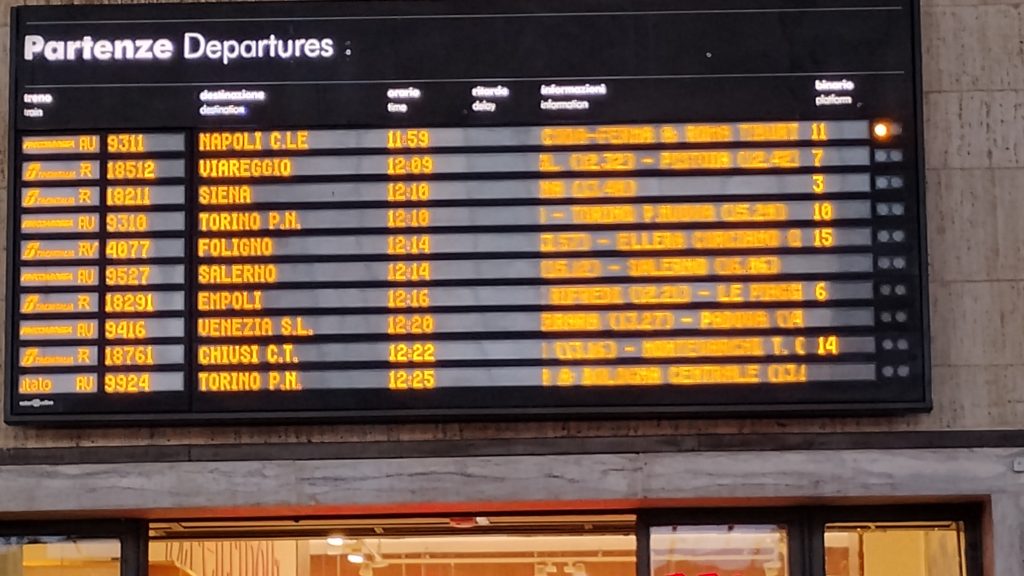
Major stations like Roma Termini, Milano Centrale, and Firenze Santa Maria Novella are large and busy but well organized.
Tips for navigating stations:
- Check electronic departure boards for platform numbers (posted shortly before departure)
- Arrive 20–30 minutes early
- Watch your belongings, especially in crowded areas
- Food courts and cafes are widely available
Luggage Rules on Italian Trains
Italian trains do not charge baggage fees.
- Store small luggage above seats
- Larger suitcases go in luggage racks at the end of each car
- Keep valuables with you
Packing light makes train travel much easier, especially when changing trains.
Tips for Planning Train Travel in Italy
- Travel during shoulder seasons (spring and fall) for fewer crowds
- Allow buffer time between connections
- Expect occasional delays or strikes
- Download train apps for real‑time updates
For travelers who prefer a stress‑free experience, escorted Italy tours and rail vacation packages handle all train reservations, connections, and logistics in advance.
Common Mistakes to Avoid
- Forgetting to validate paper regional tickets
- Waiting too long to book high‑speed trains
- Carrying oversized luggage
- Assuming all trains operate on the same schedule
For travelers who prefer a stress‑free experience, escorted Italy tours and rail vacation packages handle all train reservations, connections, and logistics in advance.
Top 10 Tips to Ride Italy’s Rails
The Top 10 Tips to how to ride Italy’s trains and rails among Italy’s big cities like Milan, Rome, Florence, and Venice to tips for buying tickets in small stations in Italy’s charming towns that may not be manned at all times by ticket sellers. For more about how to travel by train in Italy read on. Buon viaggio!
10. Save on food: Buy bread, cheese, or prosciutto before the station. Dining cars are nice, but bringing snacks is cheaper.
9. Arrive early: 30 minutes before departure ensures stress-free travel.
8. Avoid rush hour: Italian commuters fill trains during peak hours; off-peak travel can be cheaper and more comfortable.
7. Watch for pickpockets: Especially at big stations like Rome, Florence, Venice, Milan, and Naples. Keep bags in sight.
6. Prepare to exit smoothly: Gather belongings before your stop, especially before the train’s final stop.
5. Small stations may lack attendants: Machines often accept cards; carry some change just in case.
4. Luggage placement: Keep carry-ons under your seat or nearby. Place larger bags overhead in front of your seat to monitor them.
3. Double-check trains outside major cities: Many trains share tracks—ensure you board the correct one.
2. Validate regional tickets: Stamp paper tickets in the CONVALIDA machine. High-speed and digital tickets do not require validation.
1. Stay vigilant: You are responsible for your luggage; never hand it to strangers. Always confirm you actually receive a ticket when purchasing.
And finally, when you buy a ticket for the Italian train, be sure you actually receive a ticket.
Planning an Italy Rail Vacation
Train travel is one of the best ways to see Italy, but coordinating routes and tickets can be time-consuming.
Many travelers choose Italy rail vacation packages or escorted tours, combining comfortable trains with hotels, guided sightseeing, and local expertise.
Whether traveling independently or on a guided tour, understanding how trains work will make your journey smoother and more enjoyable.
Buon Viaggio!
For more about riding Italy’s trains and buying tickets watch the videos below.
You can purchase Italy train tickets online via Trenitalia or Italo websites and mobile apps, at ticket machines, or at station counters. High-speed trains are cheaper when booked in advance, while regional train tickets can often be bought the same day.
Validation is required only for paper tickets on regional trains. Digital or mobile tickets for high-speed trains, including Frecciarossa, Frecciargento, and Italo trains, do not require validation.
Frecciarossa: Italy’s fastest high-speed train, connecting major cities like Rome, Milan, Florence, Venice, and Naples.
Frecciargento: Combines high-speed and regional lines, ideal for routes such as Rome → Bari or Venice → Trieste.
Italo: Private high-speed trains, offering similar comfort and speed as Frecciarossa, often with discounted fares.
Yes. Most Italy trains allow small luggage above seats and larger suitcases in racks at the end of each car. There are no strict weight limits, but space can be limited on busy routes.
Italian trains allow luggage in overhead racks or at the end of each car. Keep valuables in a money belt or secure bag. For high-speed trains, larger suitcases should be stored where you can keep an eye on them, and always board early to find space.
Arrive 20–30 minutes early for high-speed trains at major stations like Roma Termini, Milano Centrale, or Firenze Santa Maria Novella. Check the electronic departure boards for your platform (“binario”) shortly before departure.
Yes. Trenitalia rail passes cover multiple journeys across Italy, and Italo often offers promotional fares. Booking high-speed trains in advance can save money, while regional trains have fixed pricin
“Binario” means platform. Departure boards list the train number, destination, and departure time. Always verify your platform and arrive a few minutes early.
Yes. Italy train travel is generally safe, but be cautious of pickpockets in busy stations and keep an eye on luggage while onboard.
High-speed trains: Fast, long-distance, assigned seating, ideal for traveling between major cities like Rome, Milan, and Venice.
Regional trains: Slower, frequent stops, cheaper, and perfect for day trips or smaller towns. Tickets often require validation.
Most high-speed trains offer Wi-Fi and power outlets. Mobile coverage is usually good but may be limited in tunnels or rural areas.
You can purchase last-minute train tickets at station ticket machines or counters. Many high-speed trains also allow online and mobile app bookings up to minutes before departure, but availability may be limited during peak travel times.
Validate paper tickets for regional trains
Arrive early at large stations
Keep an eye on departure boards for your platform (“binario”)
Pack light for easier boarding and seat access
Most Trenitalia rail passes work only on Trenitalia trains. Italo trains are private and require separate tickets or passes. Check specific pass rules before booking to avoid confusion.
Book high-speed trains in advance online via Trenitalia or Italo. Traveling off-peak hours and using promotional fares or regional tickets can save money. Flexible travel dates also increase chances of lower fares.