Below are maps of Rome, Florence, Venice, Milan and Naples with hotels we like.
For the best Italy hotel deals check out ItalianTourism.us hotel recommendations in Florence, Milan, Rome, Venice, in southern Italy, along Amalfi Coast, and any other destination in Italy.
Rome Hotels
There are various neighborhoods in Rome. More information on the Rome Hotels page.
Centro Storico
The iconic heart of Rome around Piazza Navona, Campo de’ Fiori, and the Pantheon, featuring narrow cobblestone streets, baroque piazzas, historic fountains, shopping, cafes, and abundant restaurants—perfect for immersing in touristy Roman charm.
Pros: Extremely central and walkable to major attractions like the Trevi Fountain and Pantheon; lively atmosphere with plenty of dining options.
Cons: Overcrowded with tourists and lacks authentic local life; expensive hotels and can be noisy at night.
Monti
A trendy, bohemian hillside neighborhood near the Colosseum and Roman Forum, with cobblestone streets, piazzas, hip bars, pizzerias, and a mix of ancient ruins and modern vibes.
Pros: Close to key ancient sites and well-connected by metro; authentic Roman feel with great food and nightlife.
Cons: Pricey accommodations due to popularity; can get loud in the evenings from bars.
Via del Corso / Piazza del Popolo
A bustling shopping and cultural area along the historic Via del Corso street, extending to Piazza del Popolo with its obelisk and gateways to Villa Borghese park—filled with boutiques, art galleries, and proximity to northern attractions.
Pros: Excellent for shopping and near public transport links; charming and walkable during the day with access to parks.
Cons: Very busy and touristy during peak hours; not much nightlife and accommodations can be expensive.
Piazza di Spagna / Spanish Steps
An elegant, upscale district centered on the famous Spanish Steps, surrounded by luxury shops, the Trevi Fountain nearby, and historic streets—ideal for a glamorous, central stay.
Pros: Highly central with beautiful architecture and easy access to fountains and shopping; quieter at night compared to other areas.
Cons: Extremely touristy and crowded; high-end prices for hotels and dining.
Prati / Vatican Area
A modern, affluent residential neighborhood adjacent to Vatican City, with wide streets, stylish bistros, boutiques, and easy access to St. Peter’s Basilica and the Vatican Museums.
Pros: Super convenient for Vatican sights (walkable); safer and quieter vibe, with good metro connections.
Cons: Far from eastern attractions like the Colosseum; limited nightlife and fewer hotel options.
Trastevere
A charming, medieval district across the Tiber River, known for its winding cobblestone alleys, vibrant piazzas, colorful buildings, and a lively scene of trattorias, bars, and street life.
Pros: Fantastic food and nightlife with an authentic, bohemian charm; pedestrian-friendly and full of character.
Cons: Not central to main attractions (requires walking or transport); very noisy at night from crowds.
Florence Hotels
Florence is compact and walkable, with most sights concentrated in the historic center. I’ve included the top-recommended ones based on convenience, atmosphere, and visitor feedback.
More information on the Florence Hotels page.
Centro Storico / Duomo (Historic Center)
The Renaissance heart of Florence around the iconic Duomo (Santa Maria del Fiore), Piazza della Signoria, Uffizi Gallery, and Ponte Vecchio, with grand palaces, marble facades, luxury shopping streets, and a buzzing atmosphere of historic cafes and gelaterias—the ultimate spot for first-time tourists.
Pros: Unbeatable location: walkable to nearly all major sights; vibrant day and night with endless dining and shopping options.
Cons; Extremely crowded and touristy; highest hotel prices and potential street noise.
Santa Croce
A lively eastern neighborhood centered on the grand Basilica di Santa Croce (burial place of Michelangelo and Galileo), with charming piazzas, leather workshops, markets like Sant’Ambrogio, and a mix of historic streets and trendy spots.
Pros: Great nightlife and authentic eateries with a local vibe; still central but slightly less overwhelming than the Duomo area.
Cons: Can be noisy in the evenings from bars and crowds; some parts feel very tourist-oriented.
Oltrarno (Santo Spirito / San Frediano)
The bohemian “across the Arno” district south of the river, known for artisan workshops, colorful streets, Piazza Santo Spirito’s daily market and cafes, Pitti Palace, and a more relaxed, artistic feel.
Pros: Authentic local atmosphere with excellent food, crafts, and fewer tourists; charming and greener with views over the river.
Con: A short walk or bridge crossing to main northern sights; lively nightlife can mean noise in popular squares.
Santa Maria Novella
The practical area around the main train station and the elegant Basilica di Santa Maria Novella, with wide streets, markets, and easy access to the center—modern yet historic.
Pros: Convenient for arrivals/departures and day trips; good value hotels and less intense crowds.
Cons: Station zone can feel gritty or busy; farther from southern sights like Ponte Vecchio.
San Marco / San Lorenzo
A university-influenced northern area near the Accademia Gallery (home to Michelangelo’s David), San Lorenzo market for food and leather, and quieter residential streets with Medici history.
Pros: Close to key art sights and authentic markets; calmer vibe with affordable options.
Cons: A bit removed from the southern historic core; limited nightlife compared to other areas.
Milan Hotels
Milan is a vibrant fashion and design capital with a mix of historic charm and modern energy, though it’s more spread out than Rome or Florence—public transport is key. I’ve focused on top areas based on convenience, vibe, and visitor reviews.
Centro Storico / Duomo
The historic core centered on the magnificent Duomo cathedral, Galleria Vittorio Emanuele II arcade, and La Scala opera house, featuring grand architecture, luxury shops, cafes, and bustling piazzas—ideal for immersing in Milan’s iconic landmarks.
Pros: Extremely central and walkable to major sights; vibrant atmosphere with high-end dining and shopping.
Cons: Overcrowded with tourists; very expensive hotels and potential noise from crowds.
Brera
An artistic, bohemian district with cobbled streets, the Pinacoteca di Brera art gallery, trendy boutiques, and cozy cafes—known for its elegant, creative vibe and proximity to the historic center.
Pros: Charming and cultured with great galleries and eateries; quieter than Duomo but still central.
Cons: Pricey accommodations; limited nightlife compared to other areas.
Navigli
A lively canal-lined neighborhood famous for its waterways, aperitivo bars, street art, and vibrant markets—perfect for a relaxed, bohemian experience with a touch of Venice-like charm.
Pros: Excellent nightlife and affordable dining; scenic walks along canals with a local feel.
Cons: Farther from main attractions (requires metro or walk); noisy evenings from bars and crowds.
Porta Nuova / Isola
A sleek, modern business district with skyscrapers like Unicredit Tower, green spaces such as Biblioteca degli Alberi park, and contemporary architecture—blending urban innovation with trendy vibes.
Pros: Great public transport links and modern hotels; safer, greener area with emerging food scene.
Cons: Lacks traditional Italian charm; farther from historic sites and can feel corporate.
Quadrilatero della Moda (Fashion District)
The upscale “Golden Quadrilateral” of luxury fashion, encompassing streets like Via Montenapoleone with designer boutiques, elegant cafes, and high-end galleries—epitome of Milan’s style capital status.
Pros: Prime for shopping and glamour; central location with sophisticated atmosphere.
Cons: Extremely expensive everything; touristy and lacks everyday local life.
Porta Venezia
A diverse, multicultural area with Art Nouveau buildings, ethnic eateries, parks like Giardini Pubblici, and a lively LGBTQ+ scene—offering a mix of history, culture, and urban energy.
Pros: Affordable hotels and varied food options; well-connected by metro with a vibrant, inclusive feel.
Cons: Busier streets with traffic; slightly removed from top tourist spots.
Stazione Centrale Area
Directly around the train station. Most immediate and convenient for quick access—many hotels are within walking distance.
Pros: Ultimate convenience for arrivals/departures, day trips, or short stays; good metro connections (M2/M3 lines); affordable hotels compared to the center.
Cons: Can feel gritty or busy (traffic, crowds); fewer charming restaurants/cafes; some areas less safe at night.
Venice Hotels
Venice is a car-free city of islands and canals, so locations emphasize walkability, vaporetto (water bus) access, and proximity to sights like St. Mark’s Square or the Rialto Bridge. I’ve focused on the six main sestieri based on convenience, atmosphere, and visitor feedback.
More information on the Venice Hotels page.
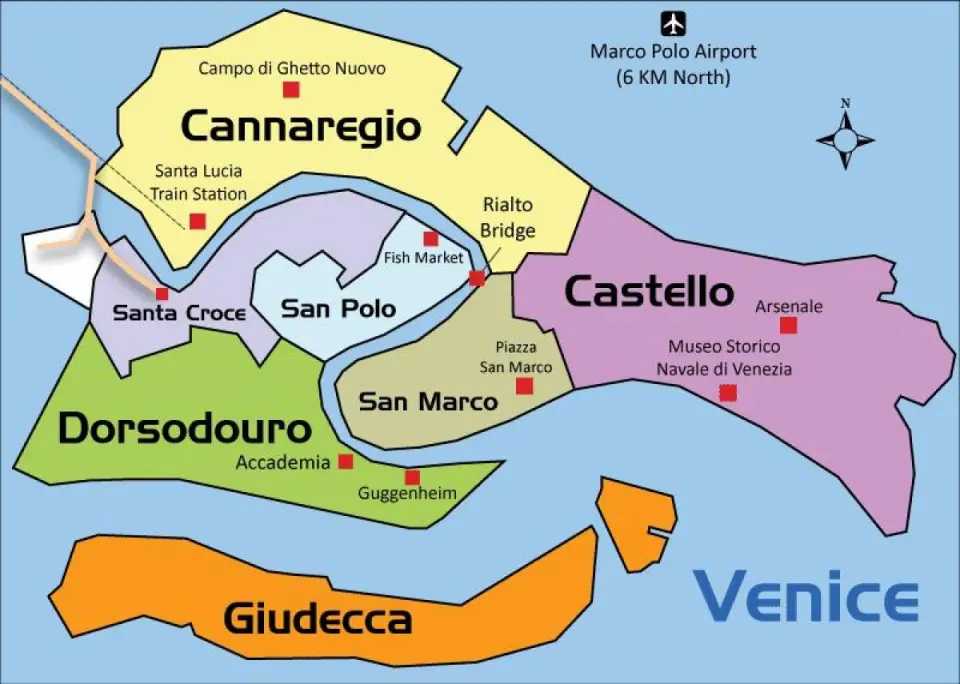
San Marco
The historic center around Piazza San Marco, St. Mark’s Basilica, and the Doge’s Palace, featuring grand canals, ornate bridges, luxury boutiques, historic cafes like Florian, and a buzzing tourist vibe— the ultimate spot for immersing in Venice’s iconic glamour.
Pros: Extremely central and walkable to top attractions; lively with events, gondola rides, and high-end dining options.
Cons: Heavily crowded with day-trippers; most expensive hotels and risk of flooding (acqua alta).
Cannaregio
A residential northern district with the Jewish Ghetto, Strada Nova’s shops, and canalside eateries, blending historic synagogues, local markets, and a more authentic, less polished Venetian life.
Pros: Affordable hotels and genuine local feel; excellent transport links near the train station and good value dining.
Cons: Farther from southern sights (20-30 min walk); quieter at night with fewer nightlife options.
Dorsoduro
artsy southwestern area around the Accademia Gallery and Peggy Guggenheim Collection, with wide campi (squares), student vibes, trendy bars, and scenic views over the Giudecca Canal.
Pros: Charming and less touristy with great art and cafes; peaceful atmosphere and some budget-friendly spots.
Cons: Requires vaporetto or longer walks to central areas; can be hilly with many bridges.
San Polo
The bustling heart near the Rialto Bridge and market, filled with narrow alleys, fresh produce stalls, cicchetti bars, and historic churches like Frari—ideal for foodies and shoppers.
Pros: Central location with vibrant markets and authentic eateries; good mix of history and daily life.
Cons: Busy and noisy during market hours; mid-range prices but can feel cramped.
Castello
The largest eastern sestiere with the Arsenale shipyards, Biennale gardens, and wide vias, offering a mix of naval history, green spaces, and quieter residential streets.
Pros: Spacious and less crowded with parks and local charm; often cheaper accommodations.
Cons: Peripheral to main tourist hubs (15-20 min walk); limited high-end options.
Santa Croce
A practical northwestern district near Piazzale Roma (bus terminal) and the train station, with modern touches, universities, and easy access to the Grand Canal.
Pros: Super convenient for arrivals and day trips; more affordable and straightforward navigation.
Cons: Lacks the classic Venetian romance; busier with traffic (though no cars) and fewer sights.
Find the guaranteed lowest price on all Italy hotels in major Italian cities like Rome, Florence, Genoa, Milan, Naples, and Venice. Or you can find Italy hotels in regions such as the Amalfi Coast, Lake Como, Sicily, Tuscany, and Umbria. Find Italy hotels in off the beaten path Italy destinations like Bologna, the Cinque Terre, Parma, Santa Margherita, Verona.
Naples Hotels
Naples is a lively, historic port city with a mix of chaos and charm—most attractions are walkable in the center, but use metro or funicular for hills. I’ve focused on top areas based on convenience, safety, and vibe.
Centro Storico (Historic Center)
The UNESCO-listed heart of Naples around Spaccanapoli street, Duomo, and underground ruins, featuring narrow alleys, baroque churches, pizzerias, and vibrant street life—perfect for immersing in authentic Neapolitan energy.
Pros: Central and walkable to major sights like the Archaeological Museum; abundant affordable eateries and historic charm.
Cons: Crowded with tourists and scooters; potential for pickpockets and noise at night.
Quartieri Spagnoli (Spanish Quarters)
A gritty, authentic grid of steep alleys west of Via Toledo, known for street art, laundry lines, local trattorias, and Maradona murals—offering a raw taste of Naples’ working-class soul.
Pros: Budget-friendly hotels and street food heaven; lively atmosphere with easy access to the center.
Cons: Narrow, hilly streets can feel unsafe after dark; crowded and chaotic with limited green space.
Chiaia
An upscale seaside district south of the center, with elegant boulevards, designer shops on Via dei Mille, art galleries, and views of Mount Vesuvius—ideal for a sophisticated, relaxed stay.
Pros: Safe and stylish with great dining and nightlife; close to the waterfront promenade.
Cons: More expensive accommodations; farther from historic sites (10-15 min walk or metro).
Vomero
A hilly residential area atop the city via funicular, centered on Piazza Vanvitelli with panoramic views, parks like Villa Floridiana, and upscale cafes—providing a quieter escape from the bustle.
Pros: Stunning vistas over the bay and safer vibe; good shopping and local markets.
Cons: Requires transport to reach (funicular or metro); limited nightlife and fewer hotels.
Posillipo
A posh coastal hillside neighborhood west of the center, dotted with villas, Roman ruins, and seaside paths offering dramatic sea views and a serene, exclusive atmosphere.
Pros: Luxurious and peaceful with beautiful beaches nearby; ideal for relaxation and sunsets.
Cons: Remote from main attractions (20-30 min by bus); very expensive and hilly terrain.
Lungomare (Seafront)
The scenic promenade along Via Caracciolo near Mergellina harbor, lined with cafes, yacht clubs, and views of Castel dell’Ovo—great for strolls and a breezy, vacation-like feel.
Pros: Relaxed waterfront access with good transport links; proximity to ferries for day trips.
Cons: Tourist-oriented and windy; limited historic sights and can be pricey for views.