
The Naples travel guide is your Naples sightseeing resource. Naples is located in the Campania region.
Naples is the oldest continually inhabited city in the world. Founded during the Neolithic period, its history is long and varied. First settled by the ancient Greeks during the Magna Grecia, successive people have built their lives and culture literally right on top of one another.
Above all Naples is famous today, and maybe for 2500 years, for its lovely Neapolitan (i Napoletani) people whose city is bustling, lively, and chaotic.
Along your Naples sightseeing journey enjoy the friendly natives out on their balconies or motoring by on their Vespa motorbikes greeting the street in their musical language of Italian.
The Neapolitan people built their lives right under Mount Vesuvius. It would appear as a result on this constant threat the Neapolitan people exude life energy like the beautiful imposing volcano they live.
With its long history the people carry centuries of lessons on how to live…well. Above all as they say in Naples, “campa un giorno e campalo bene,” which means “live for the day and live it well.”
You’re sure to feel alive when walking around Naples sightseeing.
When venturing out into Naples’ streets, be careful and guarded, and enjoy.
Naples Travel Guide Guide
Naples sightseeing focuses on the historic center and area around the largest city in southern Italy. Click on any of the links below to skip to the related Naples travel guide section:
- Sightseeing Map
- Museums
- Points of Interest
- Eating and Drinking
- Day trips and sightseeing around Naples
- Escorted Italy Tours that Include Naples
- Naples Travel Guide FAQs
Naples is renown since ancient times as a vacation destination. Many people today think of pizza when they think of Naples. But, there’s a lot more to Naples sightseeing than pizza.
Naples has an amazing culture. Its architecture, ruins, beaches, people and exquisite foods make for a perfect Italy cultural vacation destination.
For instance, walking down a street in Naples one can appreciate the antique roads with a story and a history left behind. Moreover enjoy promenading down its narrow roads with a gelato in hand gazing at the beautiful architecture and vistas.
You can’t go wrong with a trip to Naples, the largest town in southern Italy. Read the Naples travel guide for more about planning a trip to Naples.
Naples Sightseeing Map
Below is a map of Naples sightseeing highlights. On the top left corner of the map click the arrow to see the guide of listed sights. Check the boxes to display or remove the museums and points of interest from the Naples travel guide map.
Naples Museums
This Naples travel guide includes some of our favorite museums in Naples. Moreover there are over 500 churches in Naples. Each includes its own unique works of art.
Naples Archaeology Museum

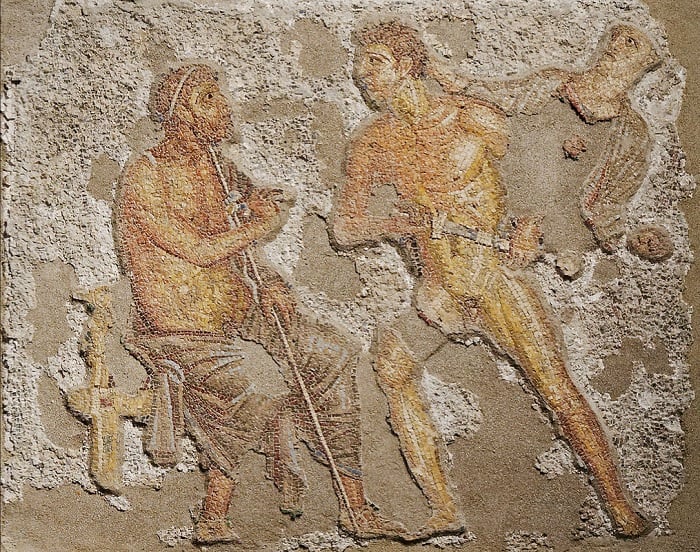
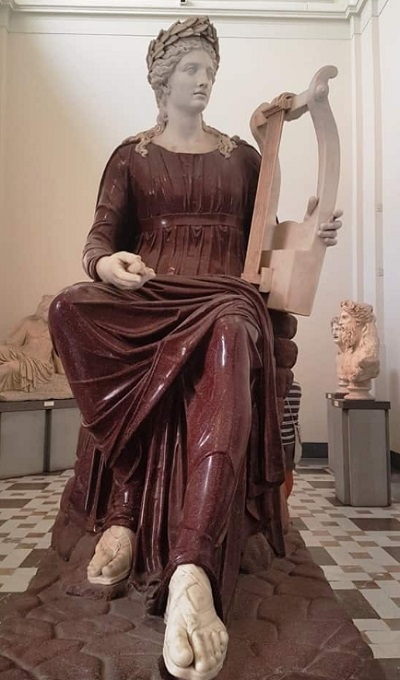
The Naples National Archaeological Museum (Museo Archeologico Nazionale di Napoli) is a museum in Naples. The collection includes works of the highest quality produced in Greek, Roman and Renaissance times.
While the nearby sites of Pompeii, Stabiae, and Herculaneum are well worth a visit, many of the frescoes, sculptures and mosaics uncovered there have long since been moved to this archaeology museum.
Thus it is considered one of the best archaeological museums in the world.
Moreover the museum has the third largest collection of Egyptian artifacts in Italy, after the Vatican Museum and the Museo Egizio in Turin. It is made up primarily of works from two private collections, assembled by Cardinal Borgia in the second half of the 18th century, and Picchianti in the first years of the 19th.
In its new layout the collection provides both an important record of Egyptian civilization from the Old Kingdom (2700-2200 B.C.) up to the Ptolemaic-Roman era.
Above all artifacts from the Magna Grecia period (800 B.C – 500 B.C), and Ancient Roman (753 B.C – 476 A.D) pieces from Pompeii and Herculaneum, among other local sites, are highlights of the collection. All these local artifacts are very well preserved because Mt. Vesuvius’ volcanic ash covered and preserved priceless works of art. They provide incredible insight into life thousands of years ago where western civilization was born.
Capodimonte Museum

King Charles VII of Naples and Sicily, who became later Charles III of Spain, built the Capodimonte Museum, the Palazzo Reale di Capodimonte, as a hunting lodge.
It is one of four Bourbon Kings’ residences around Naples bulit during their rule of the Kingdom of Two Sicilies. When Charles inherited the Farnese art collection from his mother Elisabetta Farnese, who was Duchess of Parma and ultimately Queen of Spain, it grew into an art museum.
The museum includes work of art from the 13th to 18th centuries. It is the best collection of Neapolitan School of art. It also includes portraits of members of ruling families by Titian and formed the basis for the National Gallery (Galleria Nazionale), one of the finest and largest art collections in Italy, now housed here. Its more than 500 pictures include, in addition to the Titians, works by Bellini, Botticelli, Caravaggio, El Greco, Mantegna, Michelangelo, Raphael, and Neapolitan artists of the 17th and 18th centuries.
In the royal apartments, you’ll find furniture, tapestries, and porcelain used in the palace during the Bourbon and Savoy dynasties. The small room, Salottino di Porcellana, is completely lined with porcelain.
In the park that surrounds the palace, which was the royal hunting grounds, King Charles III founded the Capodimonte workshops to produce ceramics. This highly decorative work became quite famous, and you’ll see products of the workshop at the convent Santa Chiara. Wander in the beautiful park, along avenues shaded by huge trees, past battered statues and a pond.
There is a shuttle service running from Piazza Trieste e Trento to the Capodimonte Museum. This is piazza where Caffe Gambrinus, the Galleria Umberto I and the Teatro San Carlo are all located just off the Piazza del Plebiscito. Price is about 20 Euro.
Cappella Sansevero

The Sansevero family’s private place of worship today is a museum with interesting works of art. Notably is the Roccoco art by Italian artists int he 18th century. Among the collection are anatomical model of the human body. Above all the “Veiled Christ” is a marble sculpture that has inspired many. The marble veil is so realistic that it’s tempting to try to lift it and view Christ underneath.
Moreover other artistic wonders include Francesco Queirolo’s sculpture Disinganno (Disillusion), Antonio Corradini’s Pudicizia (Modesty) and frescoes by Francesco Maria Russo that have remained untouched since their creation in 1749.
Catacombs of San Gennaro
The Catacombs of San Gennaro are underground paleo-Christian burial and worship sites in Naples, Italy, carved out of tuff, a porous stone. They are situated in the northern part of the city, on the slope leading up to Capodimonte Museum, consisting of two levels, San Gennaro Superiore, and San Gennaro Inferiore.
There you’ll find a huge underground burial site along with burial place of San Gennaro, the patron saint of Naples. If you look further you’ll discover one of the oldest churches in all Catholicism.
Ethno-Prehistory Museum
Inside the Castel Ovo is an Ethno-Prehistory Museum with ceramics and other artifacts from ancient Naples. There is no charge for admission to the castle and museum.
Royal Palace of Naples – Palazzo Reale

Located in the center of Naples in the Piazza del Plebiscito, the Royal Palace of Naples Palazzo (Reale di Napoli), is a palace, museum, and historical tourist destination. It is one of four residences around Naples used by the Bourbon Kings during their rule of the Kingdom of Two Sicilies. The other three are the Capodimonte Museum, Caserta Palace, and the Royal Palace of Portici. The Portici today is a botanical garden.
Today there are 30 rooms on display completed in the 18th when Charles III of Bourbon took up residence. The rooms are decorated with frescoes, porcelain, portraits painted by Italian masters, and tapestries.
San Carlo Opera House
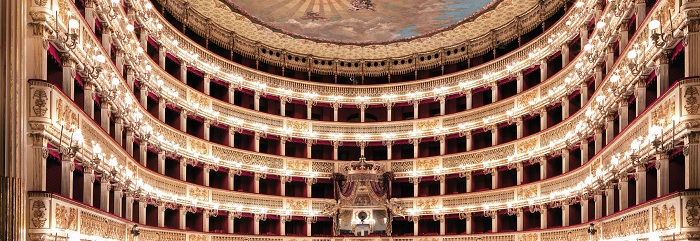
Teatro Reale di San Carlo, as originally named by the Bourbon monarchy but today known simply as the Teatro di San Carlo, is an opera house in Naples, Italy. It is connected to the Royal Palace and adjacent to the Piazza del Plebiscito.
Teatro di San Carlo is the oldest opera house in Europe. It opened in 1737. Today its opera schedule runs from January to May. If you are planning a trip for Spring you may click here for schedule and ticket information.
San Lorenzo Maggiore

San Lorenzo Maggiore doesn’t look like much from its exterior. But this church is located at the precise geographic center of the historic center of the ancient Greek-Roman city, Neapolis. Today the location is at the intersection of Via San Gregorio Armeno and via dei Tribunali.
The church’s origins derive from the presence of the Franciscan order in Naples during the lifetime of St. Francis of Assisi. The site of the present church was to compensate the order for the loss of their earlier church on the grounds where Charles I decided to build his new fortress, the Maschio Angioino, in the late 13th century.
San Lorenzo Museum
The name “San Lorenzo” may also refer to the museum now opened on the premises. San Lorenzo Maggiore is also the entrance to one of the most significant archaeological and historic sites in Naples.
The museum takes up the three floors above the courtyard and is given over to the entire history of the area that centers on San Lorenzo, beginning with classical archaeology and progressing to a chart display of historical shipping routes from Naples throughout Magna Grecia and the Roman Empire.
The museum provides a detailed account of the local “city hall” that was demolished in order to put up the church in the 13th century and continues up past the Angevin period and into more recent history.
San Lorenzo Archaeological Site
Beneath San Lorenzo is a Roman archaeological site. It is an excavation of about half of an original Roman market. The site has been open since 1992, the result of 25 years of painstaking excavation. The market place is the only large-scale Greek-Roman site excavated in the downtown area. Additionally it was in this church Boccaccio meet his beloved Fiammetta (1338).
Naples Sightseeing Highlights Points of Interest
There are many neighborhoods within Naples to stroll around. This Naples travel guide focuses on a few our favorite. For instance the Chiaia, Spaccanapoli, and Vomero neighborhoods are where we like to stroll when in Naples. These would be worth a visit when planning your trip.
Castel dell’Ovo and Via Partenope

Driving along the Naples waterfront on the scenic Via Partenope you’ll pass the Castel dell’Ovo, a castle built on the site where 2600 years ago the ancient Greeks in the 6th century BC founded the city. It is the oldest foundation in the city.
The Castel dell’Ovo was built by the Normans in the 12th century and as it stands to day by the Aragonese in the 15th century. According to legend Virgil placed his magic egg in the foundation, from which its name is derived.
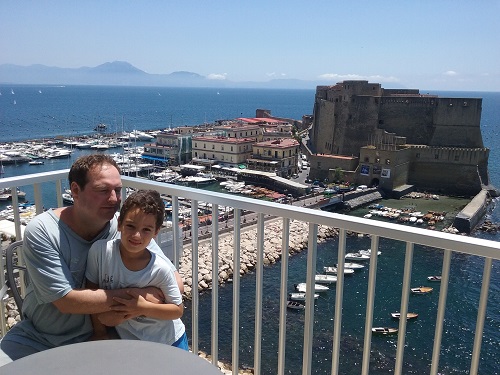
Today you can wander out and you’ll find a few restaurants and bars next door. During the summer months you’ll found the local Napoletani swimming and taking the sun around the castle’s walls.
Inside the Castel Ovo is an Ethno-Prehistory Museum with ceramics and other artifacts from ancient Naples. There is no charge for admission to the castle and museum.
In addition to Castel dell’Ovo several other large castles and edifices remain in Naples from long ago, such as King Charles III’s former hunting lodge aka The King of Two Sicily’s. It is now the Capodimonte museum, complete with both paintings and porcelain collections.
Castel Maschio Angioino
Castel Maschio Angioino, also known as Castel Nuovo, was built originally in the 1200s by Charles the I. It has been renovated several times through the centuries and has served as an important location for functions of high-ranking individuals.
Chiaia neighborhood
The Chiaia neighborhood offers a slew of Italian luxury brands, but also some distinctively local shops.
Naples Duomo (Cathedral) – Capella San Gennaro
Piazza del Plebiscito
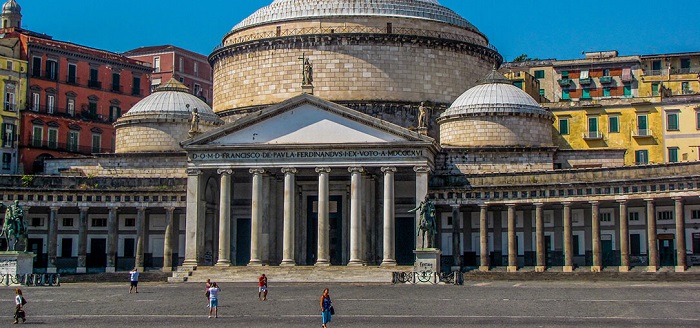
This Piazza del Plebiscito is is a large public square in the center of Naples. It is located around the corner from Caffe Gambrinus nestled between the royal palace and the church of San Francesco di Paola. It is named after the 1860 vote that unified Italy.
The building with the columns that is the focal point of the square is the Basilica San Francesco di Paola.
The square holds significant historical importance as a symbol of political and cultural transformations in the country. Originally named Piazza Largo di Palazzo, it was renamed after the 1860 popular vote that unified Italy.
This monumental square witnessed pivotal events during the Risorgimento, the 19th-century movement that led to Italy’s unification. Piazza del Plebiscito was also the site where King Ferdinand II pledged allegiance to the new Kingdom of Italy in 1861, signifying the end of the Bourbon rule.
The grandeur of the square and its surrounding architecture stand as a testament to Italy’s journey towards unity, encapsulating the nation’s political and cultural metamorphosis. Today, Piazza del Plebiscito remains a vibrant hub, hosting events, celebrations, and reflecting the enduring spirit of Naples and the Italian people.
Naples Royal Palace
On the other side of the square is The Royal Palace of Naples. The former residence of Spanish and later Bourbon monarchs, reflects Naples’ historical connections with various ruling powers.
It was one of four palaces used by the Bourbons when they ruled the Kingdom of Two Sicily’s. The lavish palace is full of gold leaf and painted ceilings. It is quite a regal experience. Another palace is now the Capodimonte Museum.
Pio Monte della Misericordia
One of Caravaggio’s most important works of art The Seven Acts of Mercy is located in this chapel. There is also a second-floor picture gallery where you’ll find works by other Neapolitan 17th- and 18th-century masters such as Luca Giordano, Massimo Stanzione, and Giuseppe Ribera.
Posillipo Hill
Posillipo Hill is one of those consistently beautiful high views over the Bay of Naples. It is also known as a spot for lovers to feel romantic.
Spaccanapoli
Spaccanapoli is a long narrow street that literally “splits” Naples’ historic center. The name is derived from the Italian verb “spaccare”.
This street dates back 27 centuries to the grid of the original Greco-Roman city of Neapolis.
The street officially starts at Piazza Gesù Nuovo where it is officially named Via Benedetto Croce. Then traveling east the street name eventually changes to Via S. Biagio dei Librai. It is this street that intersects Via San Gregorio Armeno and Via Duomo.
The neighborhood is a crowded mix of historic churches, lively piazzas, open-air cafés and one-of-a-kind shops. It’s also home to local inhabitants whose boisterous lives often spill onto the streets, providing visitors with a glimpse of what it means to be Neapolitan.
Many of the Naples sightseeing highlights are located in the Spaccanapoli area including:
- Capella Sansevero
- Naples Duomo (Cathedral) – Cappella San Gennaro
- Pio Monte della Misericordia
- San Lorenzo Maggiore
- Via San Gregorio Armeno
Via San Gregorio Armeno

Tiny street in the center of bustling Naples where the stores and workshops of local artisans who practice their art and craft of creating the famous Naples nativity scenes.
Here you’ll find shops full of the Neapolitan Creche and artisans practicing the art of presepio. Presepio are finely crafted miniature works of art, the entire range of emotions spring from the faces, the eyes and the gestures of these spectacular miniature replicas of Neapolitan life.
Each piece captures a part of the Neapolitan spirit. Each scene records 18th century life in Naples. The scenes mix the sacred and the profane, setting the Holy Family and the procession of the Magi alongside vignettes that portrayed contemporary life in 18th century Naples.
Scenes that depict ordinary people going about their ordinary lives: shoemakers and innkeepers, bakers and fruit vendors, fishmongers and butchers, carpenters and blacksmiths, and the beggars, the poor and the derelict.
Today, the Neapolitan Presepio or Presepe, o’Presebbio in dialect, is probably Naples most widely known Christmas tradition and the art of the craft is world renowned.
Vomero
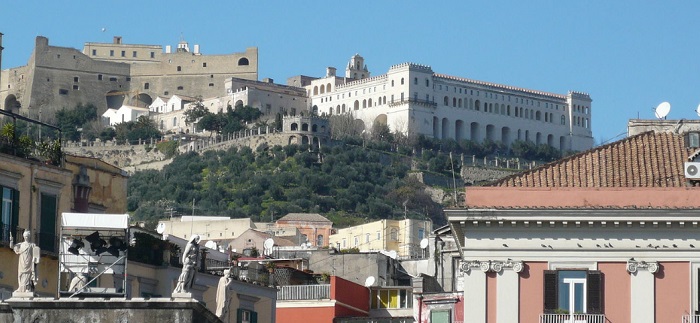
Nice neighborhood perched above Naples historic center. There you’ll find Castel Sant’Elmo (left in photo) and Certosa di San Martino museum (right in photo). Then enjoy the views of Naples historic center below, Mount Vesuvius, the Bay of Naples and the Tyrrhenian Sea.
There are three different funicolari that go to Vomero. All three will get you close to the Castel Sant’Elmo and Certosa.
- Montesanto goes from Piazza Montesanto to Via Morghen. Montesanto-Morghen is the closest but the others aren’t much further away.
- Centrale goes from Piazzetta Duca d’Aosta just off Via Toledo to Piazza Fuga.
- Chiaia goes from Parco Margherita to Via Cimarosa.
Eating and Drinking in Naples
The Naples sightseeing day begins with a delicious espresso. This will give you the energy to keep up with Neapolitan energy.
Caffe Gambrinus
For the best espresso visit Caffè Gambrinus. It is located at end of Via Chiaia across street from the Galleria and Naples San Carlo Opera house. The Piazza Trieste e Trento is in front and Piazza del Plebiscito is around the corner.
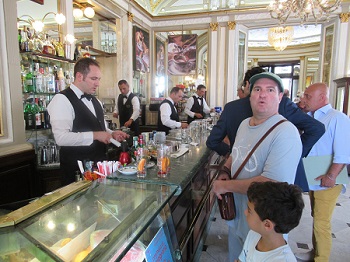
Caffe Gambrinus is one of the most exquisite cafes in Naples.
There is price difference between sitting down versus standing at the bar. If you decide to stand at bar pay the woman at cash register first then place receipt on the counter for coffee barista. Put a euro tip on top of the receipt.
Spaghetti with clams is one of the most popular meals among locals. The clams grow right in the Bay of Naples. Then mixed with the spaghetti and a light white wine sauce.
Other local specialties include gelato, local mozzarella cheese known as Buffalo di Mozzarella, and various street foods.
Naples Pizza
Pizza of course is what we all think of when we dream of food in Naples. There are many pizzerias worth a visit when vacationing in Naples. A few of our favorites to break up the daily Naples sightseeing itinerary are below.
Antica Pizzeria da Michele
Another classic is Antica Pizzeria da Michele. Lombardi off Via Cavour and Via Duomo serves more than pizza and is a classic.
Brandi Pizzeria

Brandi Pizzeria is where the first Pizza Margherita was served to Italy’s Queen Margherita in 1867. Using local ingredients of basil, mozzarella and tomato to create the colors of the Italian flag on the pizza. Brandi is a classic Neapolitan Pizzeria located right off the via Chiaia.
Concettina ai Tre Santi
The name Concettina ai Tre Santi comes from the shrine that represents the three saints just beside the entrance of the pizzeria. chef Ciro Oliva is fourth generation running this pizzeria. Renown for its fried pizza all wth local ingredients.
Di Matteo
Another pizzeria close by the Duomo and Naples Archaeology Museum is Di Matteo.
La Masardona
Fried pizza, pizza fritta, served street side. This is the classic Naples pizza “fold and go” style.
Pizzeria 50 Kalo
For pizza check out Pizzeria 50 Kalò. It’s a nice walk along the water from Piazza Vittoria toward Piazza Sannazzaro in the Mergellina neighborhood.
Pepe in Grani
Outside of Naples located near Caserta in Caizzo, is Pepe in Grani. This is a pizzeria experience unlike any others. The “50 Top Pizza” crowned Franco Pepe and his team the number one pizza in the world.
Naples Spas
One of Naples many highlights is its network of thermal spas. The entire area is volcanic. Mt. Vesuvius towers over the area.
The Island of Ischia off the coast of Naples is full springs and wells that provide relief for all types of illnesses.
On the mainland around Naples there are spas in Agnano Terme, Bacoli, Torre Annunziata, and Vico Equense, along with the other well-known resorts such as Castellammare di Stabia.
Ancient Romans visited Pozzuoli, in the center of the wide volcanic area of the Phlegraean Fields, for the sulfurous mud’s healing purposes. Today waters and mud of Pozzuoli treat respiratory and locomotive system disorders, and skin complaints.
In the Salerno area, a few kilometers from the Cilento National Park, is spa resort of Contursi. This resort’s ancient origins date back to the Roman Empire. Then upper classes frequented the water.
The waters are classified as sulfurous and salso-bicarbonate-alkaline-earthy. Above all the water heals chronic and degenerative inflammatory illnesses of the locomotive system.
Further south in the Salerno area, lies the spa town of Montesano sulla Marcellana.
There is another important resort, Telese, between Benevento and Caserta. The waters of Telese use dates back, in fact, to the Roman era. The waters here are very rich in mineral salts, carbon dioxide and hydrogen sulfide.
Day Trip Excursions from Naples
If you are looking to extend your Naples sightseeing activities beyond the city there are many options.
A must see is the Bay of Naples from water. Ride the hydrofoil across the Bay of Naples to Sorrento, Capri or around the Amalfi Coast. The different shades of blue and green waters look like a scene in Homer’s Odyssey. The way the sun hits the white cliffs with multi-colored houses overlapping each other accenting the clear blue waters like pristine images from a postcard is unforgettable.
Of all the beaches in the world it is hard to find one that compares to the beaches of the Amalfi Coast.
For more information about sightseeing outside of Naples check out the Campania travel guide.
Amalfi Coast
The Amalfi Coast is located on the south side of the Sorrentine Peninsula overlooking the Tyrrhenian Sea off the west coast of Italy. Popular destinations along the Amalfi Coast include Amalfi, Positano, and Ravello.
Capri
Known as a jet setters paradise, Capri’s main square is full of the finest made in Italy shopping boutiques. Its lovely walking paths provide vistas unique in the world for their beauty. Capri is a tiny island that becomes very crowded with tourists during the high summer season.
Caserta – Royal Palace
The Royal Palace of Caserta is a former royal residence in Caserta, southern Italy, constructed for the Bourbon kings of Naples. It is one of four residences around Naples used by the Bourbon Kings during their rule of the Kingdom of Two Sicilies. It is one of the largest palaces erected in Europe during the 18th century. Today you may wander around the beautiful garden, which is over a mile long. Inside the palace is gorgeous.
Ischia
What used to be primarily a fishing village today is a Italy spa destination. Ischia is a volcanic island. There are thermal pools and natural hot springs. With its crystal blue beaches and healing therapeutic water from its volcanic springs, all year round the thermal water is 60 to 100 degrees. Sorgeto Springs thermal water has health benefits that is excellent for skin conditions.
One sightseeing attraction is the Castello Aragonese, which was built in the 15th century on a natural island about 100 meters off Ischia. The tower across from the island is where it is rumored Michelangelo had secret rendezvous with one of the Royal family members who was married.
Due to the islands natural beauty and its spas tourism flourishes. Today there are over 200 hotels to accommodate visitors. Seven of them are 5-star hotels.
Mount Vesuvius
Mount Vesuvius is volcano located about 6 miles east of Naples on the Bay of Naples. The volcano is notorious for its eruption in 79AD. It was then that it destroyed the ancient Roman cities Pompeii, Heculaneum, and Stabiae.
Paestum

Paestum is located in southern Italy’s Campania region. It is about 2 hours south of Naples. The ancient Greeks settled in the area during the Magna Grecia era. On its hills overlooking the Tyrrhenian Sea the ancient Greeks built temples. Today they are among the best preserved ancient Greek Doric Temples in the world.
Paestum is also the origin of authentic Mozzarella di Bufala. The Italian water buffalo live on farms around the area. Its milk is key to producing the tasty cheese.
For more information about visiting Paestum click here.
Pompeii, Herculaneum & Stabiae
Immortalized by the eruption of Mt. Vesuvious 60 years after Christ in the year 69 AD, in these two ancient Roman urban city centers you’ll find the ruins of life 2000 years ago on the Bay of Naples. An easy way to travel from Naples (Napoli) to Pompeii and Herculaneum is by the high speed express train Campania Express. This train departs four times daily around the Bay of Naples and includes stops in Herculaneum, Pompeii and Sorrento.
Salerno
Salerno is a good alternative base for sightseeing around the Naples and Amalfi Coast area. The train between Rome and Salerno is less than 2 hours.
Sorrento
Sorrento is a resort town on the north side of the Sorrentine Peninsula cliffs overlooking the Bay of Naples. it is the gateway to the Amalfi Coast.
Form more information about planning a trip outside of Naples click the Campania travel guide link.
Escorted Italy Tours that Include Naples
9-Day Tuscany and Amalfi Coast

This escorted Italy tour itinerary includes three nights in Naples. There is an included day trip from Naples down the Amalfi Coast to Positano and Amalfi. There is also an optional tour to Capri.
For more information about this Tuscany and Naples tour click here.
10-Day Naples, Puglia, Sorrento

This southern Italy escorted tour begins in Naples with two nights. Naples sightseeing includes tour of the Royal Palace of Naples.
For more information about this escorted Italy tour including Naples click here.
11-Day Bari, Lecce, Matera, Naples

The escorted tour travels from Puglia to Naples. The tour ends Naples with three nights. In Naples there is a tour of Pompeii and a full day excursion down the Amalfi Coast. Additionally there is full day at leisure in Naples. Or join a optional trip from Naples to Capri.
For more information about this southern tour that ends in Naples click here.
15-Day Rome, Southern Italy and Sicily

This escorted tour from Rome to Sicily does not include nights in Naples. Instead the tour stays three nights in Sorrento. While in Sorrento there is tour of Pompeii. Then the day continues to Naples with a time to visit Piazza del Plebiscito and a stroll around.
For more information about this escorted tour of Italy that includes Naples click here.
17-Day Milan to Sicily
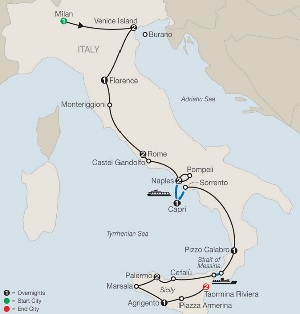
The Milan to Sicily tour includes two nights in Sorrento and one night on the Isle of Capri. While in Naples there is an excursion to Pompeii. Then there is an included tour of the Naples Archaeology Museum.
For more information about the Mialn to Sicily tour with twi nights in Naples click here.
For full listing of escorted tours to Southern Italy click link below.
Naples Travel Guide FAQs
Naples is located in southern Italy in the region of Campania. The fast train travels between Rome and Naples in little over one hour. By car it takes little over 2 hours.
Yes there are various escorted tours of Italy that include Naples.
There are some very good reasons to include Naples on your Italy vacation itinerary. The top reasons Naples is worth visiting include:
1. Walking around its streets to experience authentic southern Italy street life. Chiaia, Spaccanapoli, and Vomero are three areas to keep you busy.
2. Touring its museums,
3. indulging in its food; and
4. visiting the regions natural beauty.
1. The Naples Archaeology Museum is one of the most important museums to western civilization. This is the Naples must-see museum. If you have more time and enjoy art museums then the Capodimonte Museum is one of Italy’s largest art galleries.
2. Neapolitan Pizza is renown for its tasty crust topped with fresh tomatoes, basil and mozzarella. All the ingredients are local to the Naples area.
3. Via San Gregorio Armeno is where you will find Neapolitan artisans making nativity scenes. Presepi date back to the 13th century. They are an art form made famous by generations of craftspeople working on this street.
4. Walk along Spaccanapoli, the ancient street in Naples historic center. When making your way along this street there are various points of interest to include along the way.
5. Visit Piazza del Plebiscito. In that area check out Galleria Umberto I, Royal Palace, and San Carlo Opera House. Stop for an espresso at Caffe Gambrinus. Then walk down via Chiaia or take finucular to Vomero.
6. Walk along Via Partenope and visit the Ovo Castle.
7. Day trips and excursions from Naples to Amalfi Coast, Capri, Pompeii, Sorrento are destinations renown for their beauty and cultural importance. Further the natural beauty of Naples under the looming Mount Vesuvius is awe-inspiring. There are day trips to visit Mount Vesuvius’ crater and wineries located on its slopes.


